
Pine Bark Beetles and Dying Pines in Stockbridge, GA
The straight answer
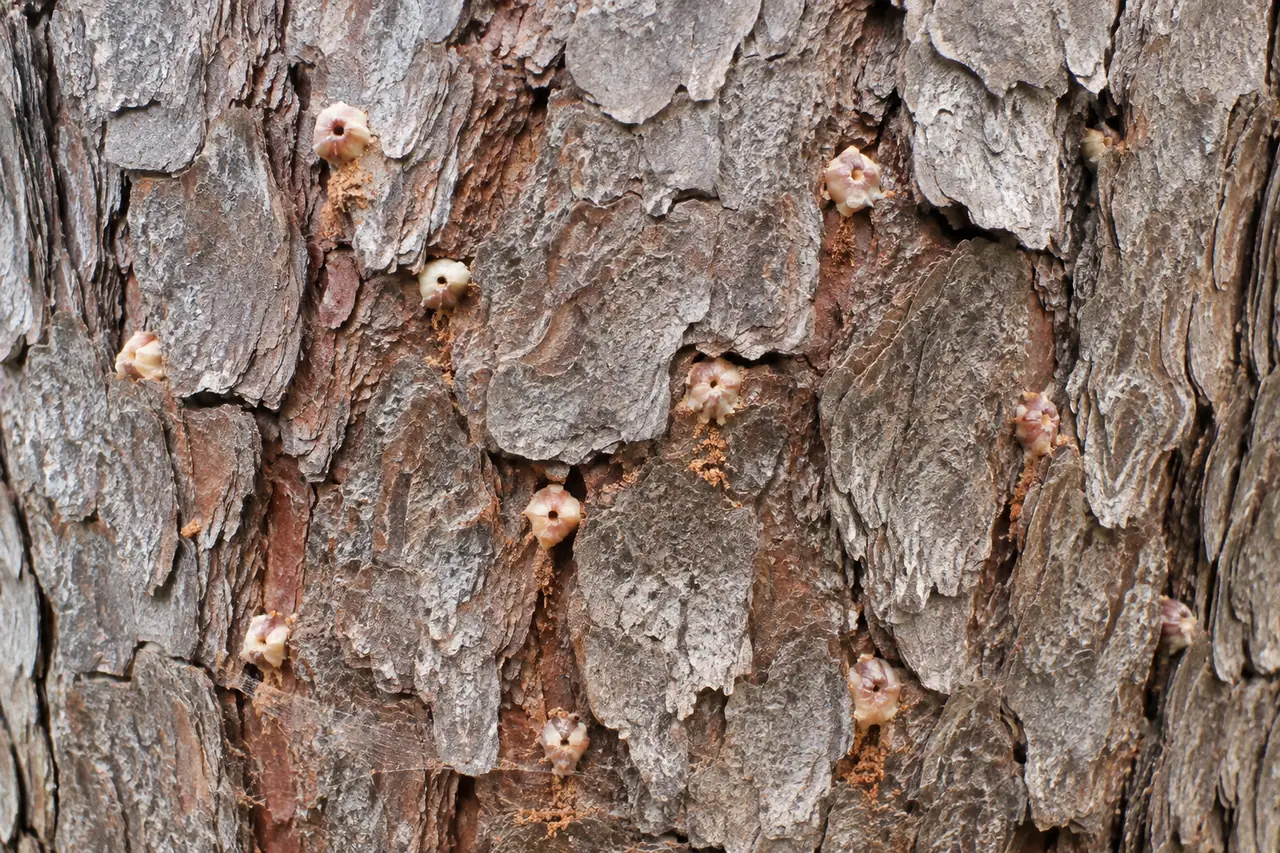
A pine in a Stockbridge yard that fades from green to yellow to rust, with small blobs of resin or reddish sawdust on the bark, is showing the pine bark beetle signs the Georgia Forestry Commission lists for engraver (Ips) beetles, which go after pines weakened by drought. Once those symptoms show, the commission says, insecticides can't save the tree (GFC, 2016, checked Nov 18, 2026).
Inside the city limits, a dead or dying pine that threatens people or property can come down outside the five-tree yearly count under the city's arborist-report rule. Call (770) 954-8419 and one independent contractor who works in Stockbridge looks at the pine and the ones around it and prices the removal.
The signs on the bark and in the crown
The Georgia Forestry Commission's notice on the 2016 Ips outbreak lists what to look for (GFC, Nov. 22, 2016, checked Nov 18, 2026):
- a discolored crown;
- dying and dead branches, and bark that loosens and sloughs off;
- pitch tubes (small lumps of resin) or red sawdust on the bark;
- frass and sawdust caught in spider webs at the base of the trunk;
- under loosened bark, galleries shaped like an I, H or Y.
In severe drought, the notice adds, pitch tubes may not form at all. A pine can be infested with no lumps on the bark.
A University of Georgia Extension report adds that yellowing needles usually show up late, when "it's often too late to save that tree" (UGA, Sept. 30, 1998, checked Nov 18, 2026).
Why stressed pines draw beetles
Engraver beetles mostly attack trees that are already weak. The UGA report names trees hit by lightning or stressed by drought after a hot, dry summer, and the forestry commission tied the 2016 outbreak to severe drought and warned that root damage could lead to more beetle-killed trees over the following two to three years. In a yard, the same stresses show up as:
- a lightning strike;
- a long dry spell, especially after a hot, dry summer;
- roots damaged by digging, grading or heavy equipment;
- neighboring pines already infested; the UGA report notes engravers sometimes kill nearby trees too.
The commission also advises against thinning pines during drought, because that is when they are most vulnerable.
Engravers, black turpentine beetles and southern pine beetles
The UGA report describes three engraver species by size: the six-spined engraver at about 5 millimeters, usually on the main trunk; the five-spined engraver at about 4 millimeters, on the upper trunk and large branches; and the southern pine engraver at about 3 millimeters, in the small branches at the top. The black turpentine beetle attacks the main trunk and leaves pitch tubes about the size of a half-dollar. The report calls the southern pine beetle "a much greater threat" because it can kill large numbers of trees at once. Telling them apart takes a look at the galleries under the bark; the county Extension office or the Georgia Forestry Commission can help identify them.
Can the pine be saved?
Once symptoms show, no. The forestry commission is blunt: "Once symptoms are observed, the tree cannot be saved by insecticides." It says preventive sprays on yard trees are normally not effective and should be avoided, and that trunk injections are a preventive step for high-value pines, used before an infestation (GFC, checked Nov 18, 2026).
That leaves two jobs: getting the dying tree down before it becomes brittle and dangerous, and watching the pines next to it. The UGA report advises removing infested trees quickly to take away the source of the next generation of beetles.
Removing a beetle-killed pine in Stockbridge
Two exemptions in the city's Unified Development Code cover this situation (Title 13, checked Nov 18, 2026):
- Infested trees, Sec. 13.3.A.4: exempts trees "found to be diseased, or insect infested" by the county extension service, the state forestry commission, an arborist or an urban forester.
- Dead, dying or hazardous trees, Sec. 13.3.A.7: exempts a DDH tree that threatens people or property, but the owner must send a professional arborist's report to the Director before removal, unless the danger is immediate.
A big pine near a house can also be specimen-sized: 30 inches in diameter measured 4.5 feet up on the uphill side, about 94¼ inches around. Section 13.6.H.3 requires a specimen to have "No major insect or pathological problem," so a heavily infested pine may not meet the standard, but the Director decides that. The city rules page has the full text.
Outside the city, Henry County's code exempts, in residential districts, "The removal of diseased, deceased, infested or dying trees, or living pine trees" (ULDC Sec. 5.03.04.C.3, published copy, checked Nov 18, 2026). See Henry County tree rules.
Why a dead pine shouldn't wait
A pine that dies standing dries out and loses its grip on its limbs and bark, and the wood weakens as decay sets in. A climber may no longer be able to work it safely, which can push the job to a bucket truck or crane and raise the price. HomeGuide lists pine removal at $200 to $1,600 on average and crane time at $500 to $2,500 per day (HomeGuide, checked Nov 18, 2026). Over a roof, in a tornado season like Henry County's, a dead pine is also a target for the next storm.
The Georgia Forestry Commission's assessment of the January 12, 2023 tornadoes counted 496 acres of damaged pine timber in Henry County alone (GFC, checked Nov 18, 2026).
Ash trees and the emerald ash borer
Pines aren't the only trees with a beetle problem here. The Georgia Forestry Commission's county list shows emerald ash borer found in Henry County in 2014; the insect kills "vigorously growing and weakened ash trees" alike (GFC, list as of Sept. 22, 2023, checked Nov 18, 2026). The 2013 notice of Georgia's first detection, posted by the commission, lists signs including thinning upper branches and twigs, leaf loss and woodpeckers stripping bark to get at the larvae, and quotes the state agriculture commissioner's plea: "Don't move firewood" (GFC, Aug. 12, 2013, checked Nov 18, 2026).
Questions about dying pines
Should the pines next to the dead one come down too?
Not automatically. Have them looked at for pitch tubes, sawdust and fading needles, and keep watching them through the next dry spell.
Can the wood be kept for firewood?
Ask the contractor. The UGA advice is to remove infested trees quickly, so beetle-infested wood shouldn't sit stacked next to healthy pines.
Who confirms the infestation for the city?
Section 13.3.A.4 names the county extension service, the state forestry commission, an arborist or an urban forester. The arborist's report under Section 13.3.A.7 covers a dead or dangerous tree.
Does a beetle-killed pine count against my five trees?
The code lists infested trees and dead or hazardous trees as exemptions of their own, separate from the five-tree allowance, and each comes with its own condition.